
Welcome to the comforting world of miso soup! This classic Japanese staple is a warm, versatile dish loved by many. It’s more than just a soup; it’s a hug in a bowl, perfect for any time of day. This guide shows you how to prepare authentic miso soup, including how to make flavorful dashi from scratch for the best taste.
Why You’ll Love This Miso Soup
This homemade miso soup recipe offers delightful benefits.
- Quick and Easy: You can prepare this delicious soup with simple steps.
- Authentic Japanese Flavor: Enjoy the true taste of Japan right in your kitchen.
- Nourishing and Umami-Rich: Every spoonful is packed with satisfying umami.
- Health Benefits: Miso and dashi provide good nutrients and probiotics. For more insights into the nutritional value of this fermented food, explore the top health benefits of miso.
- Easily Customizable: Add your favorite ingredients for a personalized touch.
- Better Than Store-Bought: Experience a fresher, more vibrant flavor than instant or restaurant versions.
Ingredients
Gather these essential items to make your delicious miso soup:
- 4 cups water
- 1 piece kombu (dried kelp) (⅓ oz, 10 g per piece; 4 x 4 inches or 10 x 10 cm)
- 1 cup katsuobushi (dried bonito flakes) (packed)
- 7 oz soft/silken tofu (kinugoshi dofu)
- 4 Tbsp miso (use 1 Tbsp, 18 g for every 1 cup, 240 ml of dashi)
- 1 Tbsp dried wakame seaweed
- 1 green onion/scallion
Notes & Substitutions
Dashi is the foundation of miso soup. You can make Awase Dashi (with kombu and katsuobushi), Kombu Dashi (vegetarian), or Vegan Dashi (kombu and dried shiitake). Miso paste also comes in varieties: white (shiro), red (aka), and yellow (awase). White miso is mild and sweet, red is robust and salty, and yellow is a good balance. Silken tofu offers a delicate texture, but firm or medium tofu also works. Rehydrate dried wakame separately in water if you want to reduce saltiness, rather than in the soup itself. For a faster option, use dashi packets or powder. Always choose quality ingredients for the best flavor.
Equipment
You will need a few basic kitchen tools for this recipe:
- Medium saucepan
- Fine-mesh sieve
- Ladle
- Miso muddler or small whisk (optional, but helpful)
- Cutting board and knife
Instructions
Creating a delicious bowl of miso soup is simple with these step-by-step instructions.
How to Make Dashi
First, let’s make the flavorful dashi, the heart of your miso soup. Understanding its fundamental role reveals why dashi is considered the essence of Japanese cuisine.
- Add 4 cups water and 1 piece kombu to a medium saucepan. For more flavor, you can soak the kombu in the water for 30 minutes. Remember not to wash kombu; the white substance on it is umami.
- Slowly bring the water to a boil over medium-low heat. This helps extract maximum umami from the kombu.
- Right before the water boils, remove the kombu. If you leave it in, it can make the dashi slimy and bitter. This is now Kombu Dashi. If you are vegetarian or vegan, use this dashi for your miso soup.
- If not vegetarian, add 1 cup katsuobushi to the kombu dashi. Bring it back to a boil, then reduce the heat and simmer for just 30 seconds.
- Turn off the heat. Let the katsuobushi sink to the bottom, which takes about 10 minutes.
- Strain the dashi through a fine-mesh sieve into a clean bowl or back into the saucepan. Discard the spent katsuobushi and kombu, or save them for repurposing.
- You now have about 4 cups of Awase Dashi. You can use it right away or store it in the refrigerator for 3-5 days, or in the freezer for up to 2 weeks.
How to Prepare Miso Soup
Now, let’s assemble your delicious miso soup:
- Gather all your ingredients. Cut 1 green onion/scallion into thin rounds.
- Cut 7 oz soft/silken tofu (kinugoshi dofu) into ½-inch (1.3 cm) cubes. Use a cutting board for safety.
- Add the prepared dashi to the saucepan. If using refrigerated dashi, warm it to a slow boil (205°F/96°C) over medium heat, then turn off the heat completely.
- Add 4 Tbsp miso paste. Scoop the miso into a ladle. Slowly add some warm dashi into the ladle and stir with chopsticks or a miso muddler until the miso dissolves completely.
- Stir the dissolved miso mixture into the dashi in the saucepan. You may see rice koji from some miso types; you can include it or strain it out based on preference.
- Gently add the cubed tofu to the miso soup.
- Right before serving, add 1 Tbsp dried wakame seaweed and the chopped green onions to the pot. If concerned about salt, rehydrate the wakame in a separate bowl of water first.
- Serve your authentic miso soup immediately for the best aroma and taste.
Pro Tips & Troubleshooting
Making the best miso soup is easy with these helpful hints. Never boil miso soup after adding the miso; high heat destroys its delicate flavor and beneficial probiotics. Always dissolve the miso paste separately in a ladle with some warm dashi before stirring it into the main pot. Add tofu after the miso is dissolved to avoid breaking the delicate cubes while stirring. You can make dashi in advance and store it, which saves time when you want to enjoy fresh miso soup. Adjust the amount of miso to your taste preference; some like it stronger, some milder. Avoid washing kombu as the white powder on its surface is pure umami. Do not overcook added vegetables; they should remain slightly crisp. Always use a cutting board when cutting tofu for safety.
Serving, Storage & Variations
Enjoying your miso soup is part of a wonderful culinary experience.
Serving Suggestions
Serve your homemade miso soup immediately to enjoy its fresh aroma and flavors. In a traditional Japanese meal, miso soup typically sits on the right side of the place setting. It often accompanies rice and other small dishes for a balanced meal.
Storage Instructions
Cool your miso soup completely before storing. Refrigerate it in an airtight container for up to 3-4 days. For longer storage, you can freeze it for up to 2 weeks, but remove the tofu first as its texture will change upon freezing. For best quality when storing a large batch, it is best to refrigerate the dashi separately and add the miso only when ready to serve a portion.
Reheating Tips
Gently warm leftover miso soup over medium heat; never bring it to a boil. Boiling will diminish its flavor and aroma. If the soup seems a bit flat after reheating, add a small amount of fresh miso paste dissolved in a ladle of warm soup to refresh its taste. Adjust liquid if the soup has thickened.
Variations
Feel free to customize your miso soup.
- Vegetables: Add thinly sliced root vegetables like daikon, carrots, or potatoes. Leafy greens such as spinach or napa cabbage are also great additions.
- Mushrooms: Experiment with different mushrooms like shiitake or enoki for extra umami.
- Proteins: Include thinly sliced pork, chicken, or clams for a heartier soup.
- Repurposed Ingredients: Don’t discard your spent dashi ingredients! Use spent kombu to make Simmered Kombu (Kombu Tsukudani) or create Homemade Furikake with spent katsuobushi for a delicious rice seasoning.
Nutrition
Miso soup is a nutritious and satisfying dish.
| Nutrient | Amount Per Serving |
|---|---|
| Calories | 57 kcal |
| Carbohydrates | 5 g |
| Protein | 4 g |
| Fat | 2 g |
| Saturated Fat | 0.3 g |
| Polyunsaturated | 1 g |
| Monounsaturated | 0.4 g |
| Sodium | 532 mg |
| Potassium | 135 mg |
| Fiber | 1 g |
| Sugar | 2 g |
| Vitamin A | 46 IU |
| Vitamin C | 1 mg |
| Calcium | 62 mg |
| Iron | 1 mg |
This soup provides a good source of protein, fiber, and essential minerals. Miso paste, when not boiled, also offers beneficial probiotics for gut health.
FAQ
You might have some questions about making miso soup.
What is miso soup?
Miso soup is a traditional Japanese soup made from dashi stock and softened miso paste, often with tofu, seaweed, and green onions. It’s a staple dish known for its comforting, umami-rich flavor.
What is dashi and why is it essential?
Dashi is a basic Japanese stock and the foundation of most Japanese dishes, including miso soup. It provides the deep umami flavor that defines authentic Japanese cuisine.
Can I make miso soup vegetarian/vegan?
Absolutely! Use Kombu Dashi (made only with kombu seaweed) or a dashi made with kombu and dried shiitake mushrooms. Make sure all other ingredients are plant-based.
What types of miso should I use?
White (shiro) miso is popular for its mild, sweet flavor. Yellow (awase) miso offers a balanced taste, while red (aka) miso is stronger and saltier. Choose based on your preference.
Why shouldn’t I boil miso soup?
Boiling miso soup after adding the miso paste will diminish its delicate flavor, aroma, and destroy the beneficial probiotic enzymes present in miso. Always warm it gently.
How long does miso soup last?
You can store homemade miso soup in the refrigerator for 3-4 days. For best flavor, it’s ideal to consume it fresh or add miso just before serving.
Conclusion
Making authentic homemade miso soup is a rewarding experience. You create a comforting bowl that is both simple to prepare and rich in traditional Japanese flavors. You now have all the tools to master this delicious soup. I encourage you to try different variations and make it your own. Let us know your favorite additions in the comments below, and share this recipe with your friends and family!
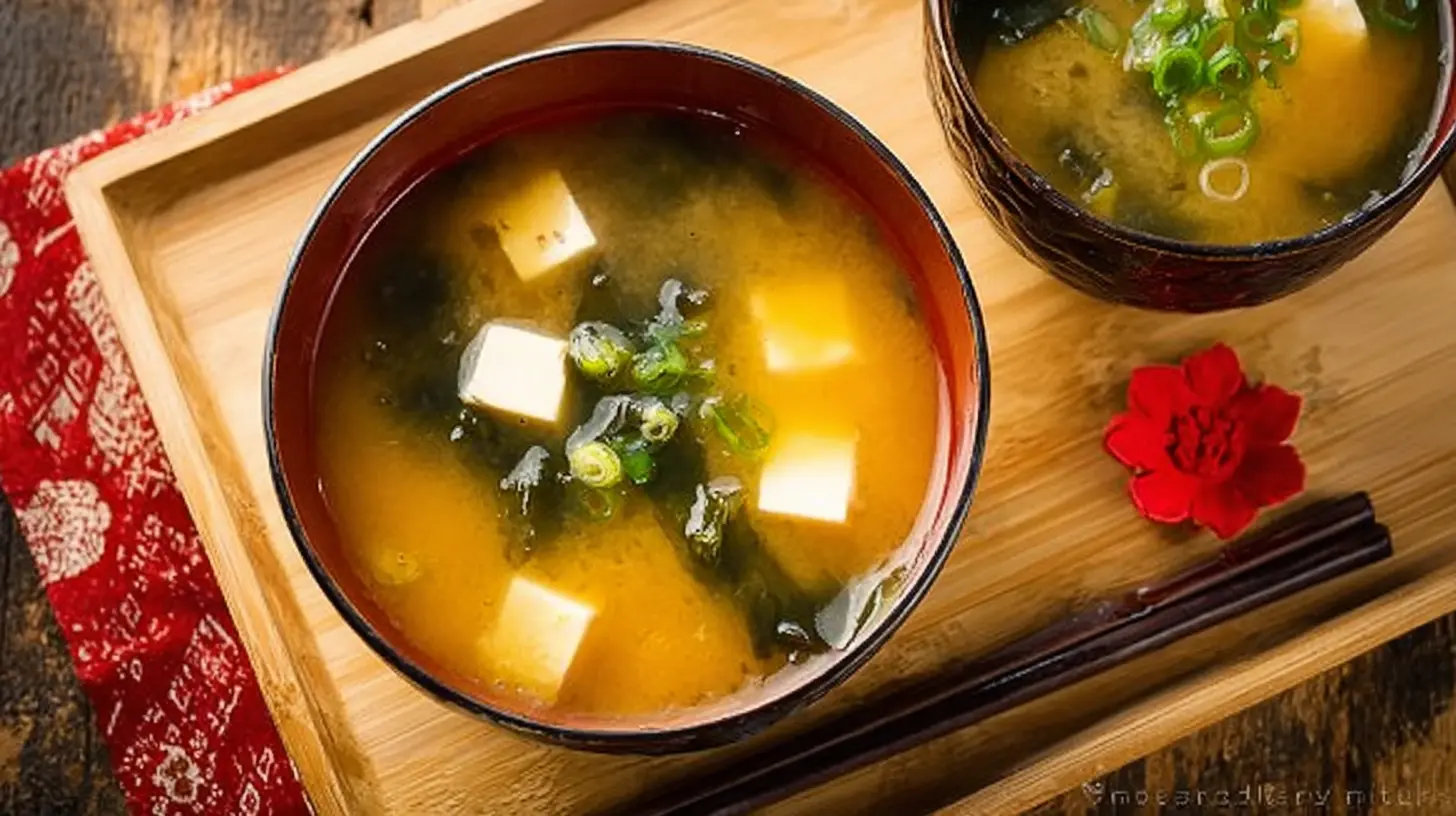
Authentic Homemade Miso Soup (味噌汁)
Ingredients
Equipment
Method
- Gather all necessary ingredients and finely slice one green onion or scallion into thin rounds.
- Add 4 cups of water and 1 piece of kombu to a medium saucepan; soak for 30 minutes if time allows, but never wash the kombu.
- Slowly bring the water to a boil over medium-low heat for about 10 minutes to extract umami, then remove the kombu just before boiling to prevent sliminess and bitterness.
- For Awase Dashi, add 1 cup katsuobushi to the kombu dashi and bring it back to a boil, then reduce heat and simmer for 30 seconds.
- Turn off the heat and let the katsuobushi sink for about 10 minutes, then strain through a fine-mesh sieve to yield roughly 4 cups of Awase Dashi.
- Add the dashi to the saucepan and bring it to a slow boil (205°F/96°C) over medium heat, then turn off the heat.
- Dissolve 4 Tbsp of miso in a ladle with some dashi, stirring completely before adding to the pot.
- Cut 7 oz of soft/silken tofu into ½-inch cubes and gently add to the miso soup after the miso is fully dissolved.
- Just before serving, stir in 1 Tbsp of dried wakame seaweed and the chopped green onions to preserve their freshness and color.
- Serve the miso soup immediately, as its aroma and taste diminish over time, and never boil the soup as it will lose flavor and aroma.