
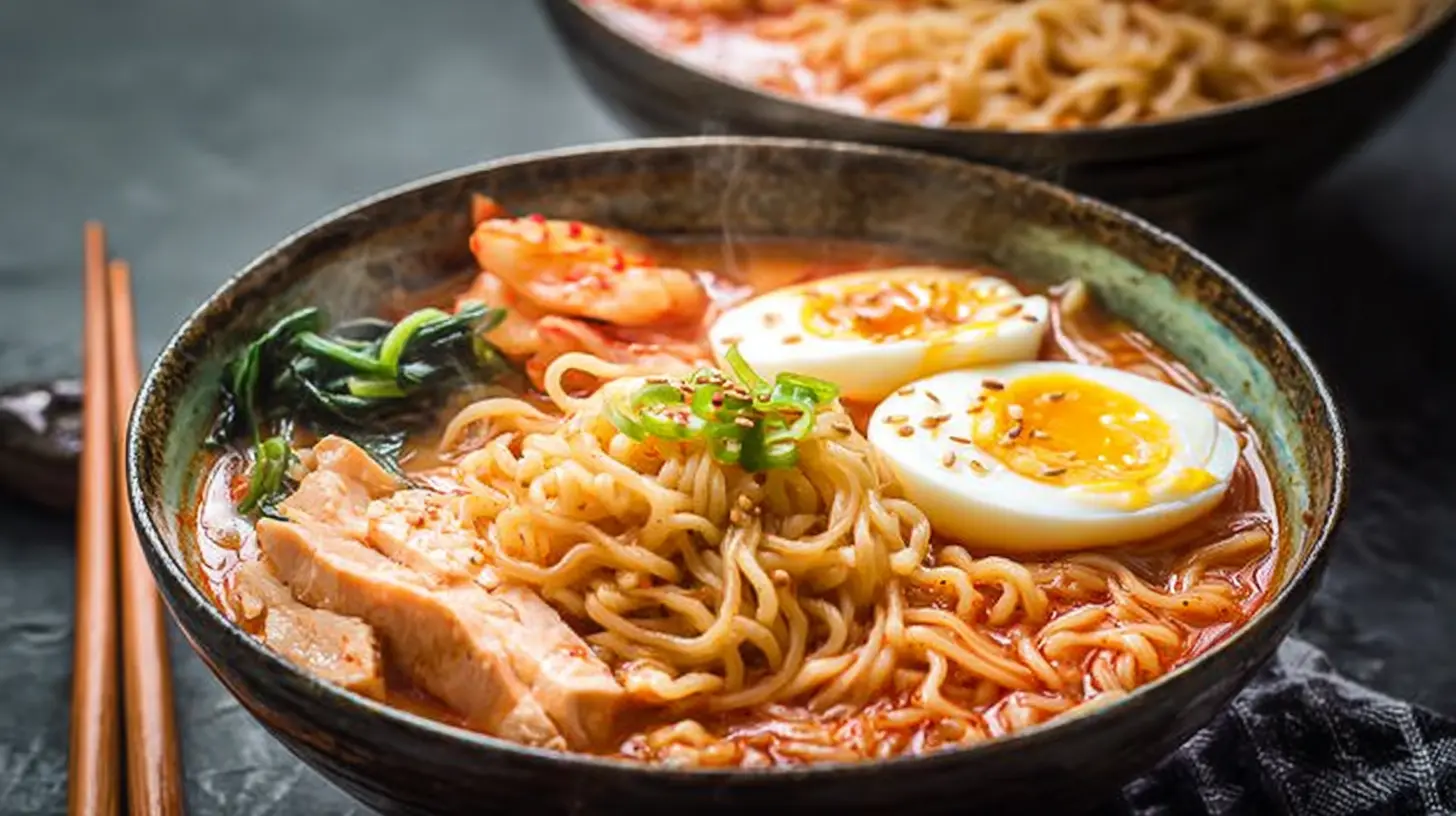
Forget instant noodles! This homemade Korean ramen recipe brings the bold, spicy, and deeply savory flavors of Korea right to your kitchen. We’re taking the comforting elements of Japanese ramen and infusing them with authentic Korean ingredients. The result is a vibrant, soul-warming bowl that goes far beyond any package, offering a rich, complex broth that truly satisfies. Get ready to elevate your noodle game!
Why You’ll Love This Korean Ramen
- Unrivaled Depth of Flavor: Homemade broth offers a richness instant versions can’t touch.
- Perfect Balance: Enjoy a harmonious blend of spicy, savory, and umami in every bite.
- Easily Customizable: Add your favorite proteins and vegetables to make it uniquely yours.
- Weeknight Friendly: It’s quicker than traditional Japanese ramen, yet incredibly fulfilling.
- Impressive Meal: A restaurant-quality dish that’s simple enough for beginners to master.
Ingredients
For the Broth & Chicken:
- 4 cups chicken stock
- 4 tsp gochujang
- 1 tsp doenjang (optional)
- 2 tsp shiro miso
- 1 tsp coarse gochugaru (not the fine powdered type)
- 1 tsp fish sauce
- 4 skinless chicken thighs
For Assembly & Toppings:
- 2 large eggs
- 4-5 oz Japanese ramen noodles (not the instant kind)
- Green onions, enoki mushrooms, kimchi – or your preferred toppings
Notes & Substitutions
Chicken Stock: Use low-sodium stock for better seasoning control. Homemade or quality store-bought works well.
Gochujang: This Korean chili paste provides a sweet-spicy depth. Learn more about this fundamental Korean condiment, Gochujang (Korean Chili Paste). Brands like Sempio or CJ are great choices.
Doenjang: A fermented soybean paste, it adds profound umami. Discover the origins and uses of doenjang, or Korean soybean paste. Omit if unavailable, but it truly enhances the broth.
Shiro Miso: White miso contributes a mellow, sweet, and salty complexity. Any light miso can substitute.
Coarse Gochugaru: Important for texture and vibrant color. Fine powder will make the broth cloudy.
Fish Sauce: Boosts umami; substitute with an extra splash of soy sauce and a pinch of salt if needed.
Chicken Thighs: Thighs stay moist and tender. Skinless is preferred for this broth. Explore more chicken thigh recipes to master this cut.
Eggs: Jammy eggs with soft yolks are ideal. Use large eggs; adjust cooking time for extra-large.
Japanese Ramen Noodles: Seek fresh or dried non-instant noodles for superior texture. Find them in Asian markets.
Toppings: Customize freely. Kimchi, green onions, and enoki mushrooms are classic Korean additions.
Equipment
- Large pot (for broth and noodles)
- Medium saucepan (for eggs)
- Instant-read thermometer
- Fine-mesh strainer (optional, for smooth broth)
- Sharp knife (for slicing chicken and eggs)
- Deep serving bowls
Instructions
Making the Spicy Korean Broth
Begin by simmering 4 cups of chicken stock over medium-low heat in a large pot. This pot should be roomy enough for the stock, chicken, and eventually, the noodles. Poach the skinless chicken thighs directly in the simmering stock until they reach an internal temperature of 175°F, which typically takes about 25 minutes. Always use an instant-read thermometer for accuracy.
Carefully remove the cooked chicken thighs from the pot and set them aside to cool slightly. Once cool enough to handle, shred or slice the chicken into bite-sized pieces and reserve. If you prefer a smoother broth, strain the chicken stock at this point, then return it to the pot.
In a small bowl, combine the gochujang, doenjang (if using), shiro miso, and coarse gochugaru. Add a small amount of the hot chicken stock from the pot to this bowl and stir well to create a smooth paste. This prevents clumping in the main broth. Stir this flavorful paste mixture and the fish sauce into the main broth. Taste the Korean ramen broth and adjust the salt or spice level as needed. Your vibrant, spicy broth is now ready.
Preparing the Jammy Eggs
While the broth simmers, prepare your jammy eggs. Bring a medium saucepan of water to a rolling boil. Carefully lower the 2 large eggs into the boiling water and boil for exactly 6 minutes and 30 seconds for perfect jammy yolks. If you are using extra-large eggs, extend the boiling time to 7 minutes and 30 seconds.
Immediately transfer the cooked eggs to an ice bath or very cold water. This crucial step stops the cooking process and makes peeling easier. Once the eggs are completely cool, peel them gently. Halve the eggs lengthwise with a sharp knife just before serving to reveal their beautiful, runny yolks.
Assembling Your Korean Ramen
To assemble your delicious Korean ramen, bring the prepared broth back to a gentle boil. Add the Japanese ramen noodles to the simmering broth and cook according to the package directions until they are perfectly al dente. Just before serving, return the shredded chicken to the broth to warm through.
Using a ladle, transfer the cooked noodles, chicken, and rich broth into deep serving bowls. Artfully arrange the halved jammy eggs, fresh green onions, enoki mushrooms, and a spoonful of kimchi on top of each bowl. Serve your authentic Korean ramen immediately. For those who love extra heat, offer additional coarse gochugaru on the side.
Pro Tips & Troubleshooting
- Achieving Deep Broth Flavor: Don’t rush the simmering process. Quality stock is key.
- Perfect Noodle Texture: Avoid overcooking; add noodles to the broth just before serving.
- Egg Doneness Control: Precise timing and an immediate ice bath ensure perfect jammy yolks.
- Adjusting Spice Level: Easily customize heat by adding more or less gochujang and gochugaru.
- Layering Flavors: Mixing the chili and miso pastes with broth first ensures a smooth, well-integrated flavor.
- Presentation Matters: Arranging toppings thoughtfully makes your homemade Korean ramen visually appealing.
Serving, Storage, and Variations
Serving Suggestions
Enjoy this flavorful Korean ramen as a satisfying standalone meal. For a complete experience, pair it with simple sides like a crisp cucumber salad or a small bowl of kimchi. If you’re extra hungry, serve it alongside a small portion of steamed white rice to soak up every last drop of the delicious broth.
Storage & Reheating
For best results, store the broth and cooked noodles separately in airtight containers in the refrigerator. Keep your fresh toppings, like green onions and mushrooms, in separate containers as well. Reheat the broth gently on the stovetop. When ready to eat, add fresh noodles or quickly warm pre-cooked noodles in the broth. Consume within 2-3 days for optimal freshness.
Variations
- Protein Swaps: Substitute chicken with sliced pork belly, pan-fried tofu, or shrimp for different flavors.
- Vegetarian/Vegan: Use a rich vegetable stock, omit the fish sauce, and add extra mushrooms or firm tofu.
- Extra Veggies: Boost nutrition and flavor with additions like bok choy, spinach, corn, or bean sprouts.
- Spice Level: Reduce chili paste for a milder taste, or add extra gochugaru for a serious kick.
- Garnish Ideas: Finish with a sprinkle of toasted sesame seeds, a sheet of nori, a drizzle of chili oil, or crispy fried garlic.
Nutrition
Homemade Korean ramen offers a hearty meal packed with protein, carbohydrates, and essential fats. This recipe provides a balanced meal with flavorful ingredients.
| Nutrient | Amount |
|---|---|
| Servings | 2 servings |
| Calories | 761 kcal |
| Carbohydrates | 65 g |
| Protein | 71 g |
| Fat | 21 g |
| Saturated Fat | 5 g |
| Cholesterol | 440 mg |
| Sodium | 1449 mg |
| Potassium | 1318 mg |
| Fiber | 2 g |
| Sugar | 10 g |
| Vitamin A | 655 IU |
| Vitamin C | 2.6 mg |
| Calcium | 78 mg |
| Iron | 4.9 mg |
Note: Nutritional information is an estimate. For precise values, use an online calculator with your specific ingredients.
FAQ
What is the difference between Korean ramen and ramyeon?
“Ramen” typically refers to the Japanese dish with fresh noodles and a complex broth, while “ramyeon” usually describes the instant, pre-packaged Korean noodle soup. This recipe merges the authentic broth style with Korean flavors.
Can I make this Korean ramen vegetarian or vegan?
Absolutely! Use a robust vegetable broth, swap chicken for tofu or mushrooms, and omit fish sauce. Ensure your gochujang is vegan, as some brands contain seafood.
How can I make the broth less spicy?
Reduce the amount of gochujang and gochugaru to your preference. You can also add a touch of cream or milk at the end for a milder, richer finish.
Can I prepare components of this recipe ahead of time?
Yes, you can make the broth and cook the chicken a day or two in advance. Store them separately in the refrigerator. Prepare the eggs and toppings just before serving for the freshest taste.
What kind of noodles are best for Korean ramen?
Look for fresh or dried Japanese ramen noodles, not the instant variety. They have a superior chew and absorb the rich broth wonderfully.
Where can I find Korean ingredients like Gochujang and Gochugaru?
Most Asian grocery stores will stock these essential Korean ingredients. Many larger supermarkets also carry them in their international foods aisle.
Conclusion
This homemade Korean ramen recipe is a game-changer, proving that authentic, bold flavors are easily achievable in your own kitchen. You’ve transformed simple ingredients into a deeply satisfying bowl of spicy, savory goodness, leaving instant versions far behind. So go ahead, treat yourself to this elevated comfort food. Make this amazing Korean ramen today and share your delicious creations with us!
Authentic Korean Ramen Recipe: Bold, Spicy, and Better Than Instant
Ingredients
Equipment
Method
- Bring chicken stock to a simmer over medium-low heat in a large pot.
- Poach the chicken thighs in the simmering stock for about 25 minutes, until an internal temperature of 175F is reached, using an instant-read thermometer.
- Remove chicken thighs, let cool slightly, then pull the meat off the bones into bite-sized chunks and set aside.
- Strain the stock if desired to remove any bits, then return it to the pot.
- In a small bowl, combine gochujang, optional doenjang, miso, and gochugaru with a bit of hot chicken stock, stirring well to create a smooth mixture.
- Add the gochujang mixture and fish sauce to the stock in the pot, stir, then taste and adjust salt as needed; your broth is now ready.
- In a medium saucepan, bring water to a boil and cook large eggs for 6 minutes 30 seconds, or 7 minutes 30 seconds for extra-large eggs.
- Immediately submerge the cooked eggs in cold or ice water to chill and stop the cooking process, then peel and set them aside.
- Right before serving, carefully slice the soft-boiled eggs in half lengthwise using a sharp knife.
- Bring the Korean ramen broth to a boil, add the Japanese ramen noodles and cook according to package directions, then return the reserved chicken to the broth to warm through.
- Ladle the broth, noodles, and chicken into serving bowls, topping with the sliced eggs, green onions, enoki mushrooms, and kimchi; serve with extra gochugaru on the side for those who prefer more spice.